
Two Tests, One Story
A lipid profile shows what’s circulating. Liver enzymes show the strain of what’s accumulating. Across the dataset, the two moved together, and the higher the triglycerides, the sharper the liver signal.
The Dataset
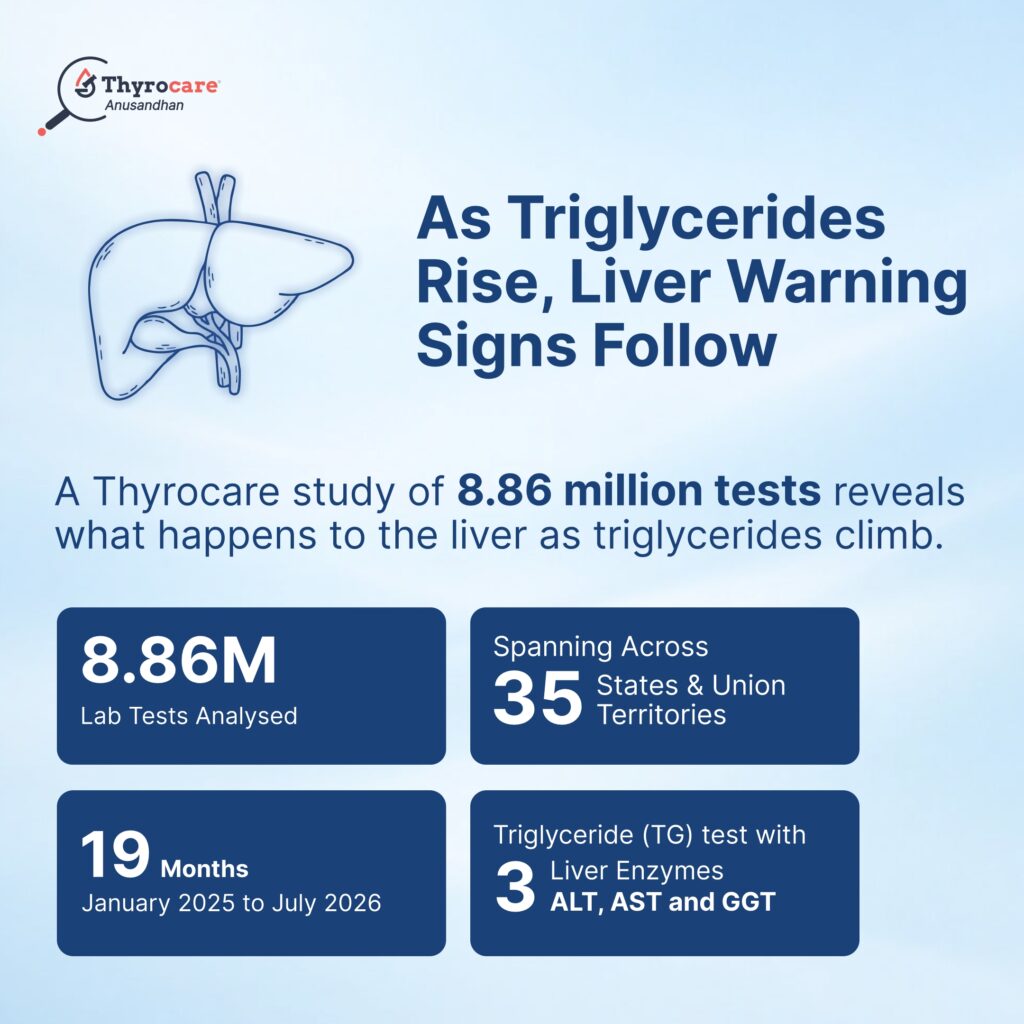
Data of 8,861,057 lab tests from January 2025 to July 2026, spanning 35 states and union territories and every age group was analyzed. Each record paired a triglyceride (TG) test with three liver enzymes: ALT, AST, and GGT.
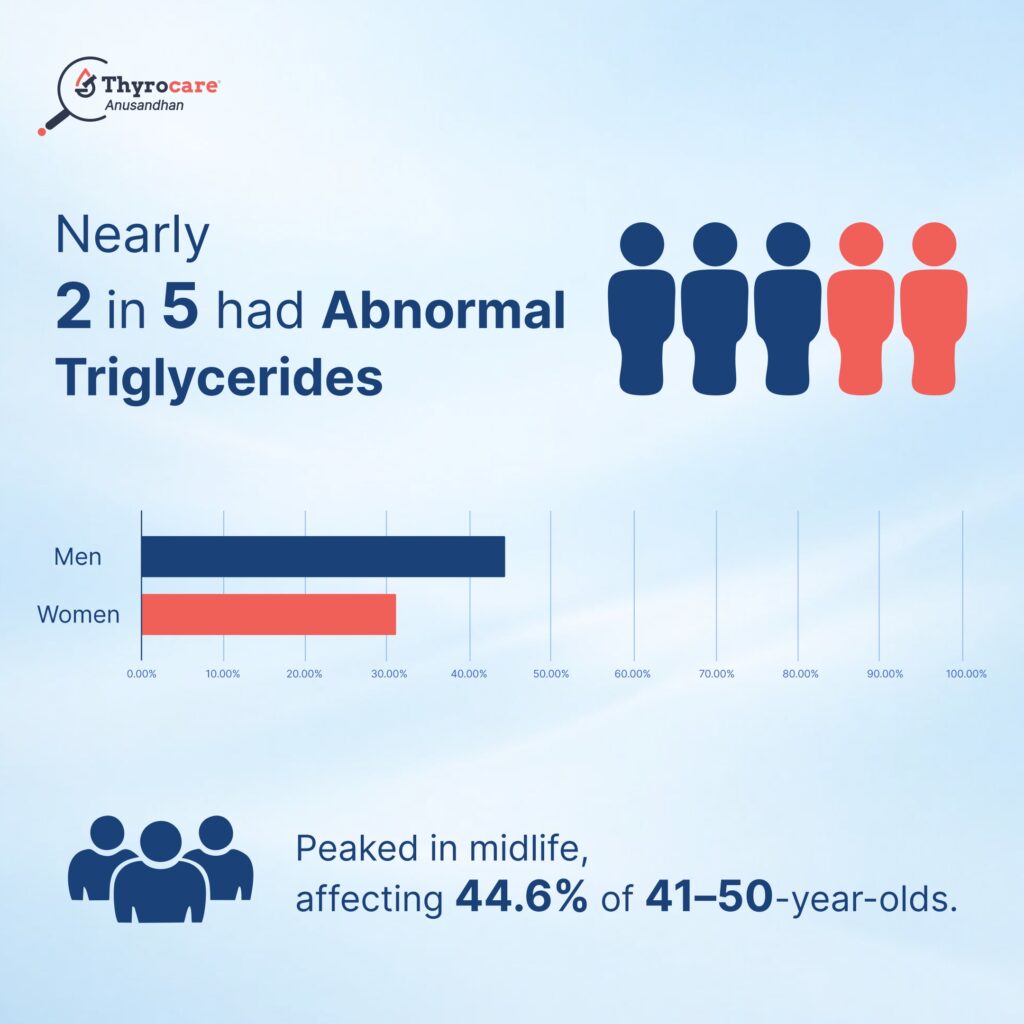
Nearly 2 in 5 Had Abnormal Triglycerides
High triglycerides turned out to be remarkably common. Nearly 2 in 5 records (37.9%) had high triglycerides (150 mg/dL or above). Men were hit harder: 44.4% of men tested had high triglycerides, compared with 31.1% of women. The problem peaked in midlife, affecting 44.6% of 41–50-year-olds.
The Higher the Triglycerides, the Worse the Liver Picture.
When triglyceride levels were split into four groups, from normal to very high, liver enzymes rose at every step, like climbing a staircase.
Percentage of people with each liver enzyme raised, by triglyceride level:
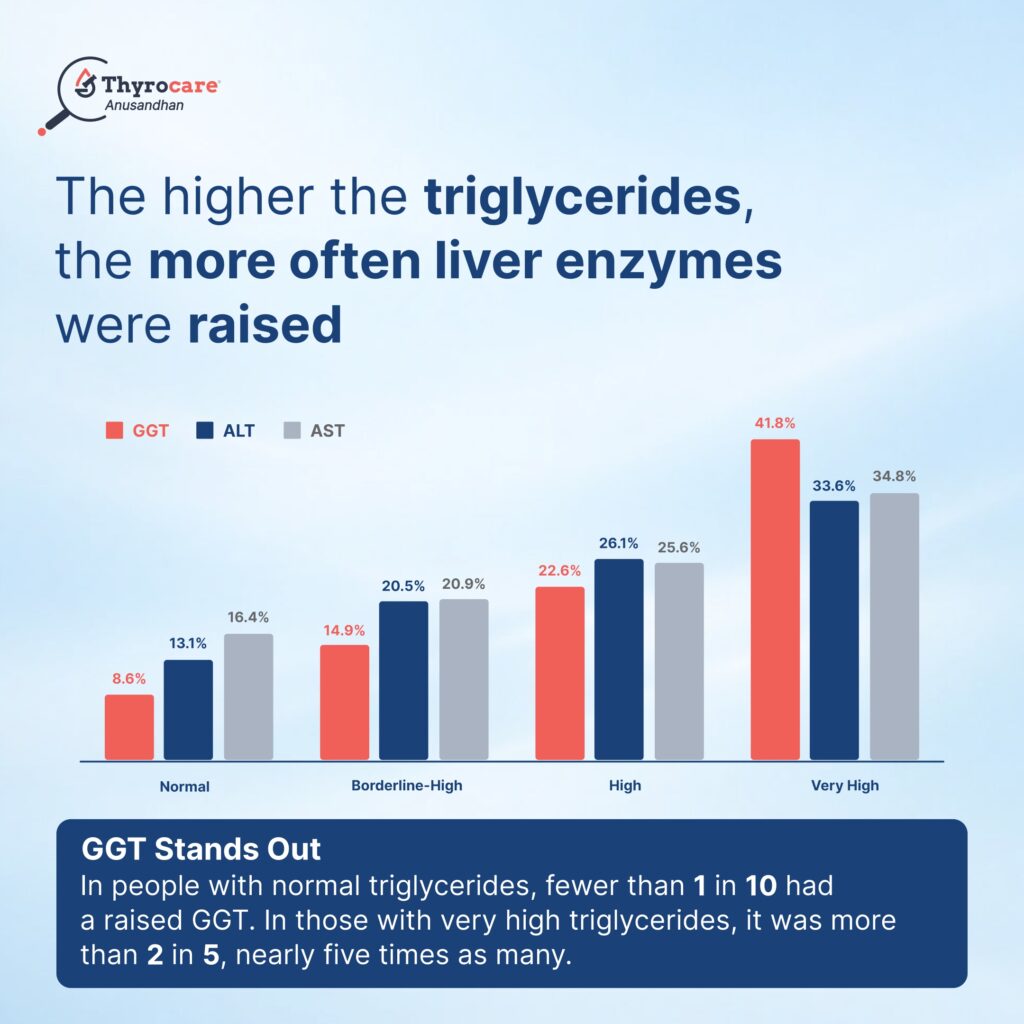
GGT stands out the most. In people with normal triglycerides, fewer than 1 in 10 had a raised GGT. In those with very high triglycerides, it was more than 2 in 5, nearly five times as many. At that top level, GGT becomes the most commonly raised of all three enzymes. The pattern showed up in both men and women, but the climb was steeper in men: 43.7% of men with very high triglycerides had a raised GGT, compared with 35.9% of women.
High Triglycerides Raise the Odds of Liver Enzyme Elevation
When triglycerides were high, liver enzymes were far more likely to be raised too. People with high triglycerides had 2.61 times the odds of a raised GGT (19.8% vs 8.6%), 2.06 times the odds of a raised ALT (23.8% vs 13.1%), and 1.59 times the odds of a raised AST (23.8% vs 16.4%).
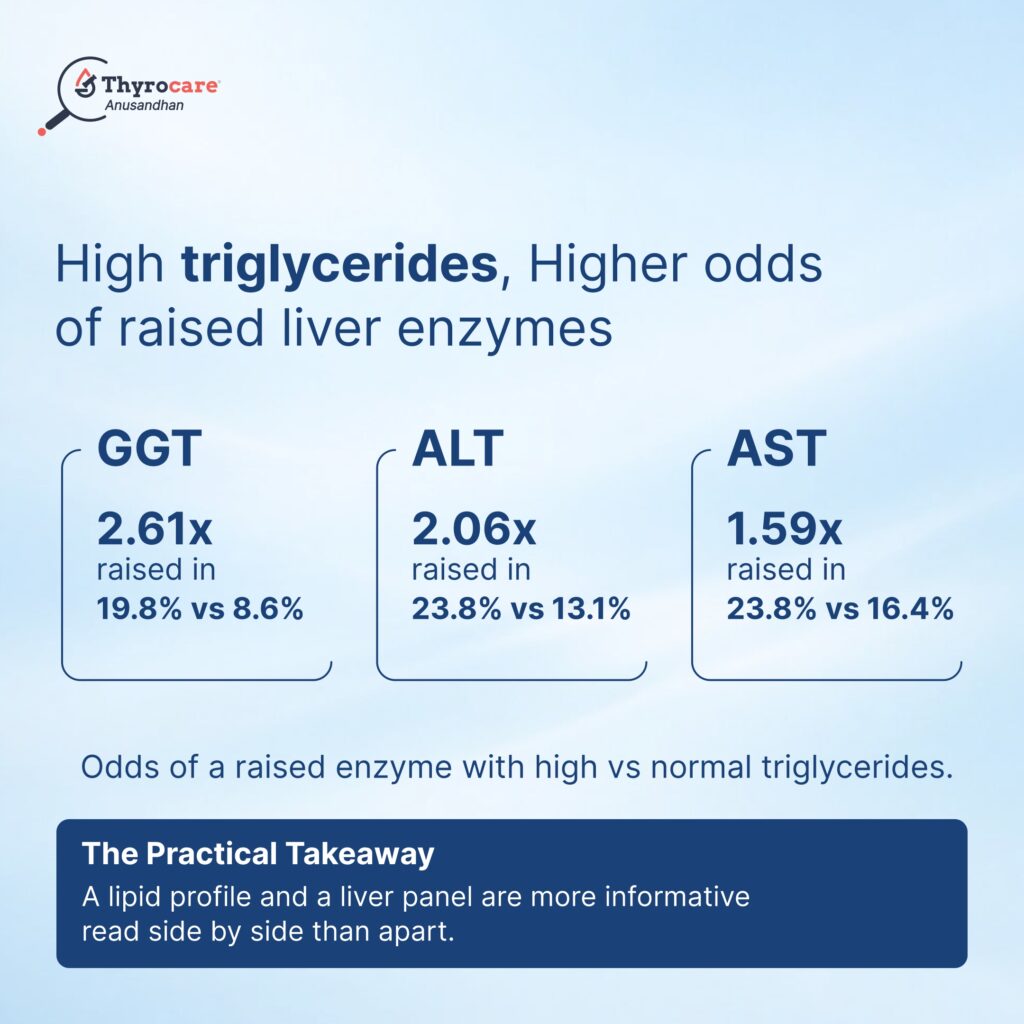
GGT showed the strongest link, ALT came next, and AST the weakest, and this order held in both men and women and across every age group. The GGT link was also consistent across India’s 12 highest-volume states, where the odds of a raised GGT were 2.3 to 2.8 times higher in people with high triglycerides. The reason lies in where each enzyme comes from. GGT sits on the surface of liver cells and bile ducts and is among the first to react to fat-related stress. ALT comes mainly from the liver, so it rises when liver cells are injured. AST is the least specific of the three, since it also leaks from muscles and the heart, which weakens its link to triglycerides.
Why It Matters to Patients
For patients with high triglycerides, liver enzymes deserve a closer look too, and GGT in particular. In this study, GGT tracked triglycerides more closely than any other liver enzyme, and the higher the triglycerides, the more often it was raised.
The practical takeaway: a lipid profile and a liver panel are more informative read side by side than apart.
Why Does It Matter to Professionals?
- Scale: 8.86 million encounters, versus 14,950 in NHANES III and 3,451 in the Framingham GGT analysis, two landmark studies in this area.
- Reach: 35 states and union territories, 19 months, all age groups.
- Rigour: NABL-accredited network, confirmed reference cut-offs, STROBE + RECORD reporting standards, every trend test p<0.001
- Contribution: A key prior Indian study on GGT and triglycerides involved 154 patients. This study asks the same question at national scale.
Commenting on the findings, Dr. Ramesh Kinha, COO, Thyrocare, said, “High triglycerides aren’t just a heart number. Across 8.86 million records, the higher the triglycerides, the more often liver warning signs showed up alongside them. That’s the power of data at this scale: it brings out patterns smaller studies can only hint at. Read together, a lipid profile and a liver panel tell a fuller story than either can alone. If your triglycerides are high, look at your liver too.”
Dr Preet Kaur, Chief Scientific Officer, Thyrocare, added, “What stood out was the consistency. As triglycerides rose, liver enzymes rose with them at every level, and GGT showed the sharpest climb of all. GGT is among the most sensitive markers of fat-related stress on the liver, so this pattern is worth paying attention to. While these findings can’t tell us whether one causes the other, they give clinicians good reason to look at lipid and liver results side by side.”