
Tumor markers are valuable tools that aid clinicians in the detection, monitoring, and management of several cancers. Beyond individual patient care, large-scale laboratory data can reveal important population-level trends that help deepen our understanding of disease patterns.
This report analyses data from 11,05,332 individuals who underwent health check-up packages containing one or more tumor markers between 2023 and 2025. The findings reveal that nearly 8 in 100 individuals tested positive for at least one tumor marker (CEA, CA 19-9, AFP, PSA, CA-125, CA 15-3). While tumor marker positivity alone is not diagnostic of cancer, it highlights the importance of timely clinical evaluation and appropriate follow-up investigations.
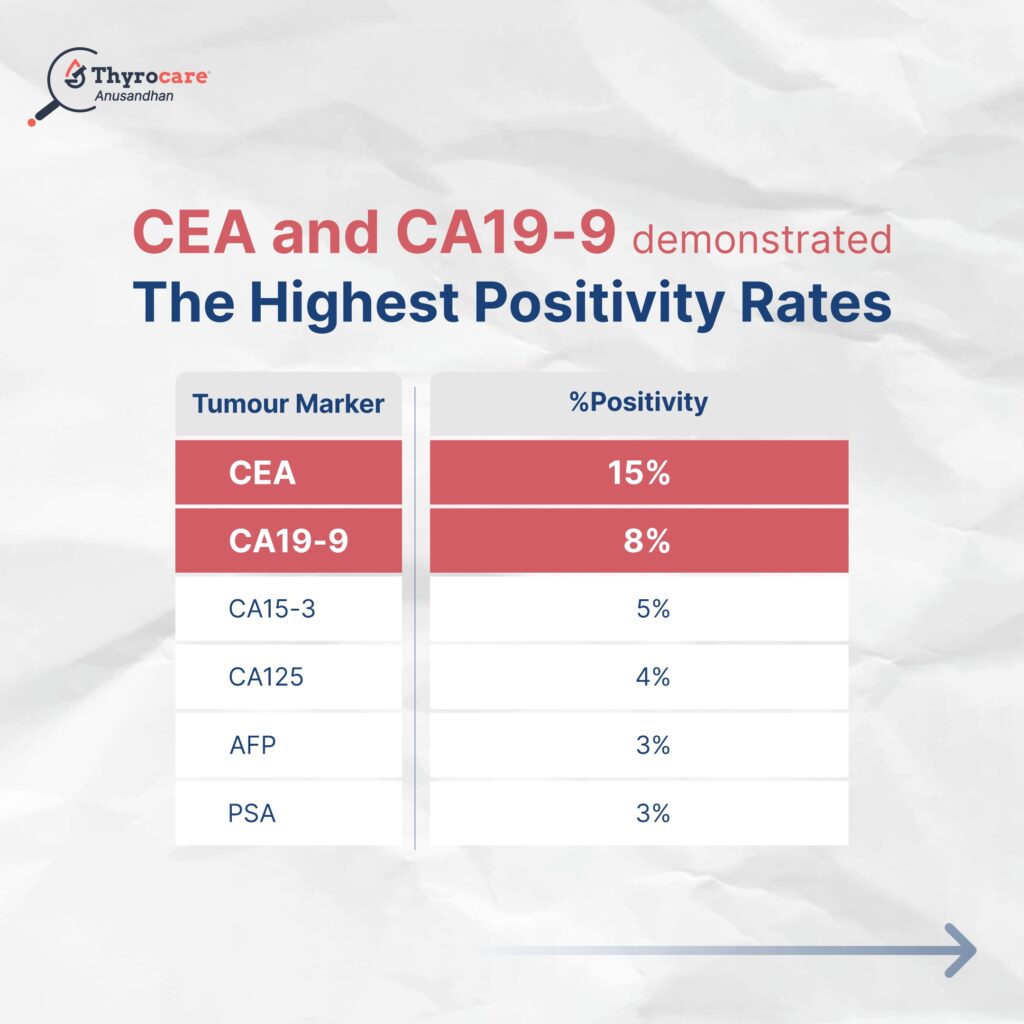
CEA and CA19-9 Emerged as the Most Frequently Positive Markers
Among all tumor markers evaluated, CEA and CA19-9 demonstrated the highest positivity rates. These markers are commonly associated with gastrointestinal cancers, including colorectal, pancreatic, gastric, and biliary malignancies. However, it is important to note that both markers may also be elevated in several benign gastrointestinal and hepatobiliary conditions, such as inflammation, liver disease, pancreatitis, and other non-cancerous disorders.
Their higher prevalence therefore reflects a combination of potential malignant and non-malignant conditions, underscoring the importance of interpreting tumor markers alongside clinical findings and imaging.
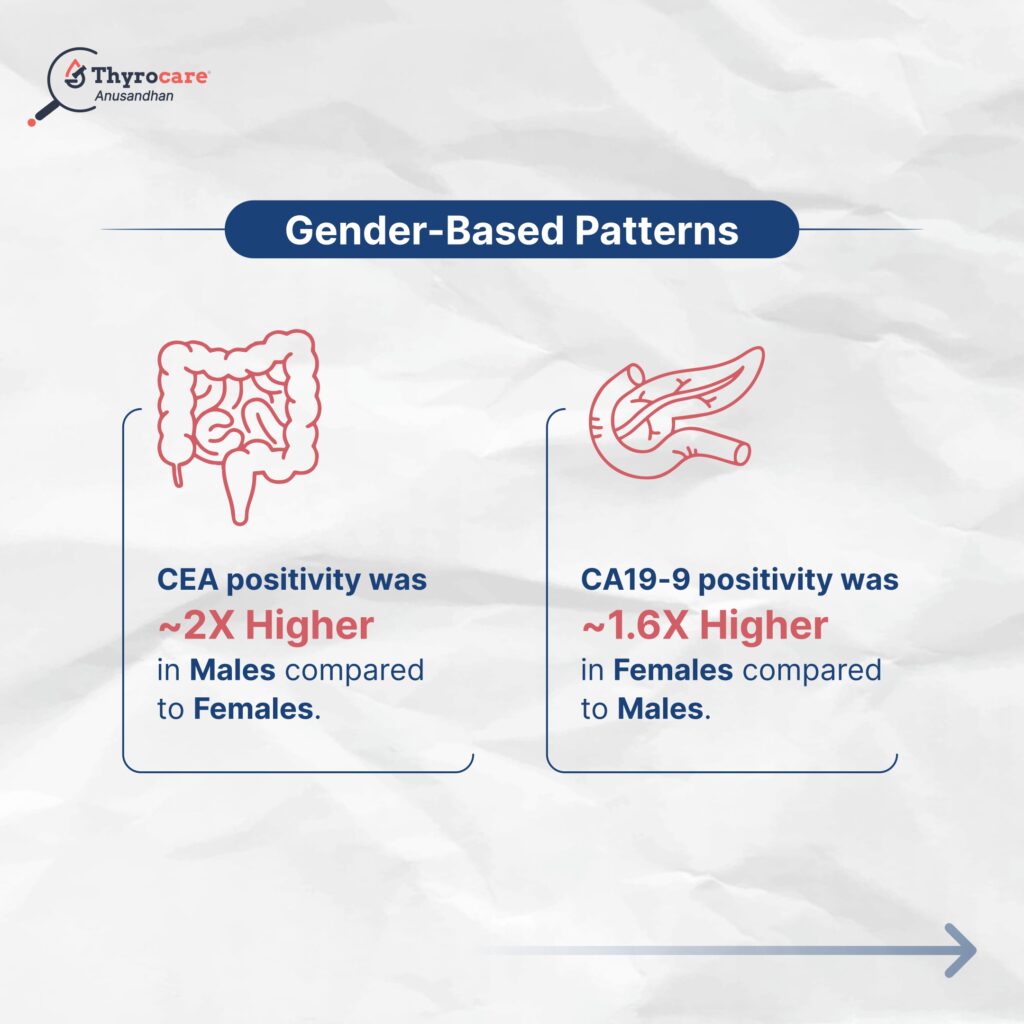
Distinct Gender-Based Patterns Were Observed
The analysis also revealed notable differences between males and females. While CEA and CA19-9 remained the most prevalent markers in both genders, their distribution varied.
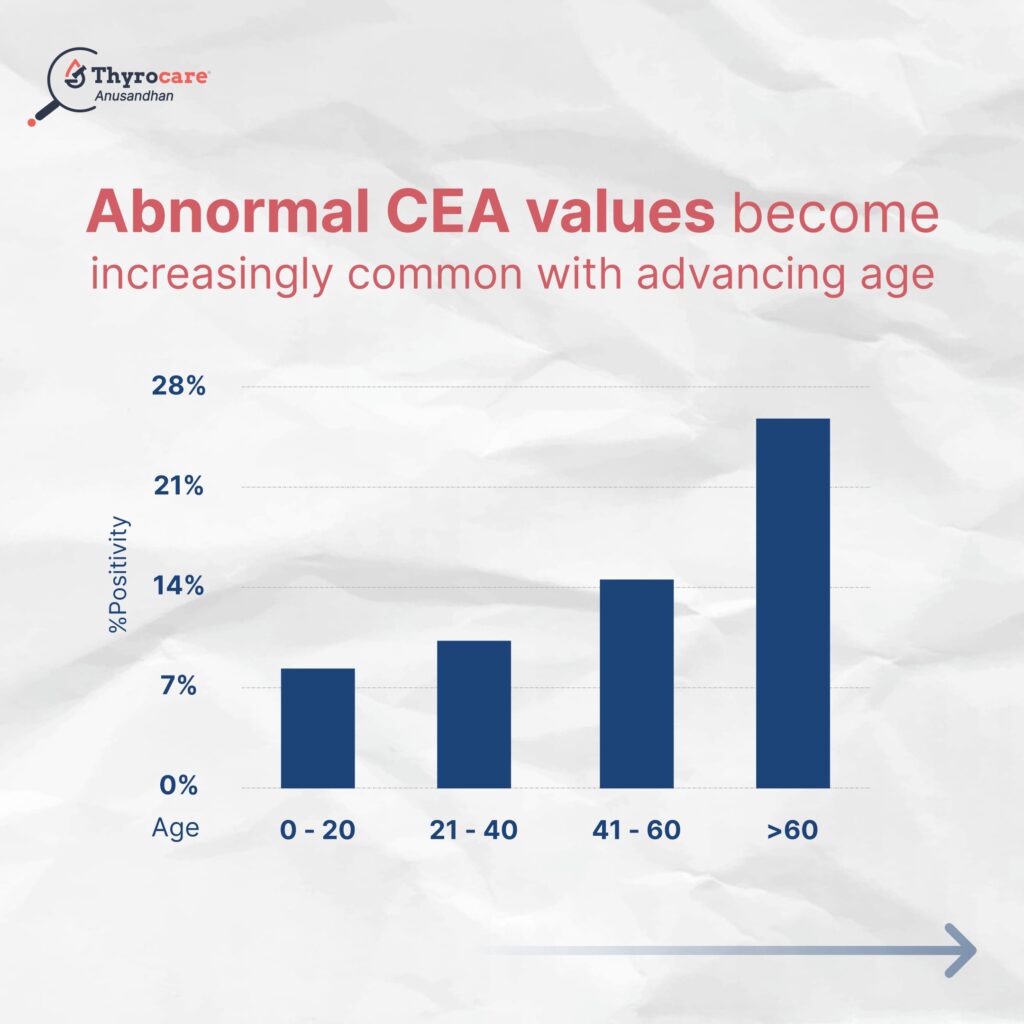
CEA Positivity Increased Significantly with Age
CEA demonstrated a clear age-related increase in positivity. While the overall positivity rate was 15.24%, it rose to 25.69% among individuals aged over 60 years. This trend suggests that abnormal CEA values become increasingly common with advancing age, reinforcing the importance of appropriate clinical evaluation in older adults.
AFP and CA19-9 Show the Highest Degree of Marker Elevation
Beyond simple positivity, the analysis assessed the extent of biomarker elevation above the upper reference limit. Among positive results, AFP (21%) and CA19-9 (21%) showed the highest proportion of values exceeding 3× the upper reference limit, followed by CA15-3 (19%), CA125 (16%), and PSA (16%). The greater proportion of >3× elevations observed for AFP and CA19-9 highlights their tendency to exhibit more pronounced biomarker abnormalities among positive results.
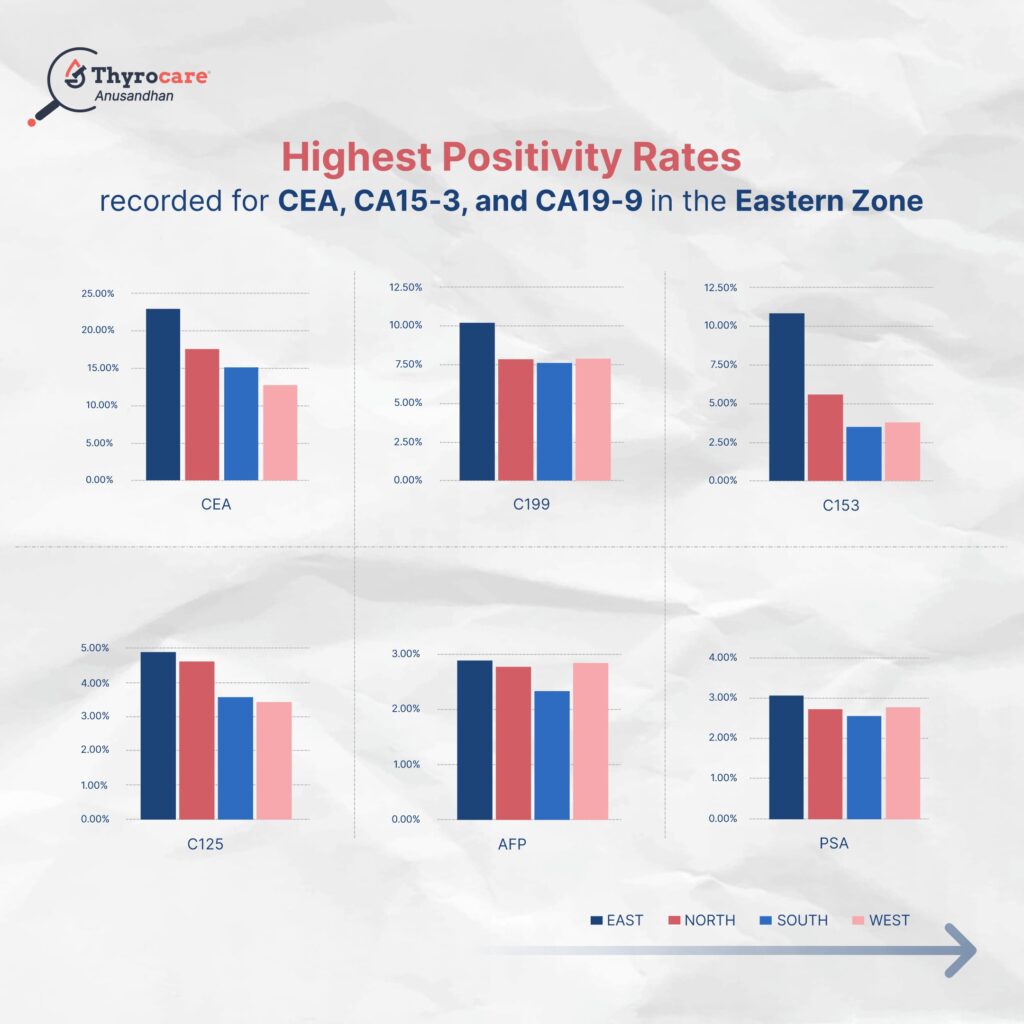
The Eastern Zone recorded the highest positivity rates for CEA, CA15-3, and CA19-9 compared with all other regions.
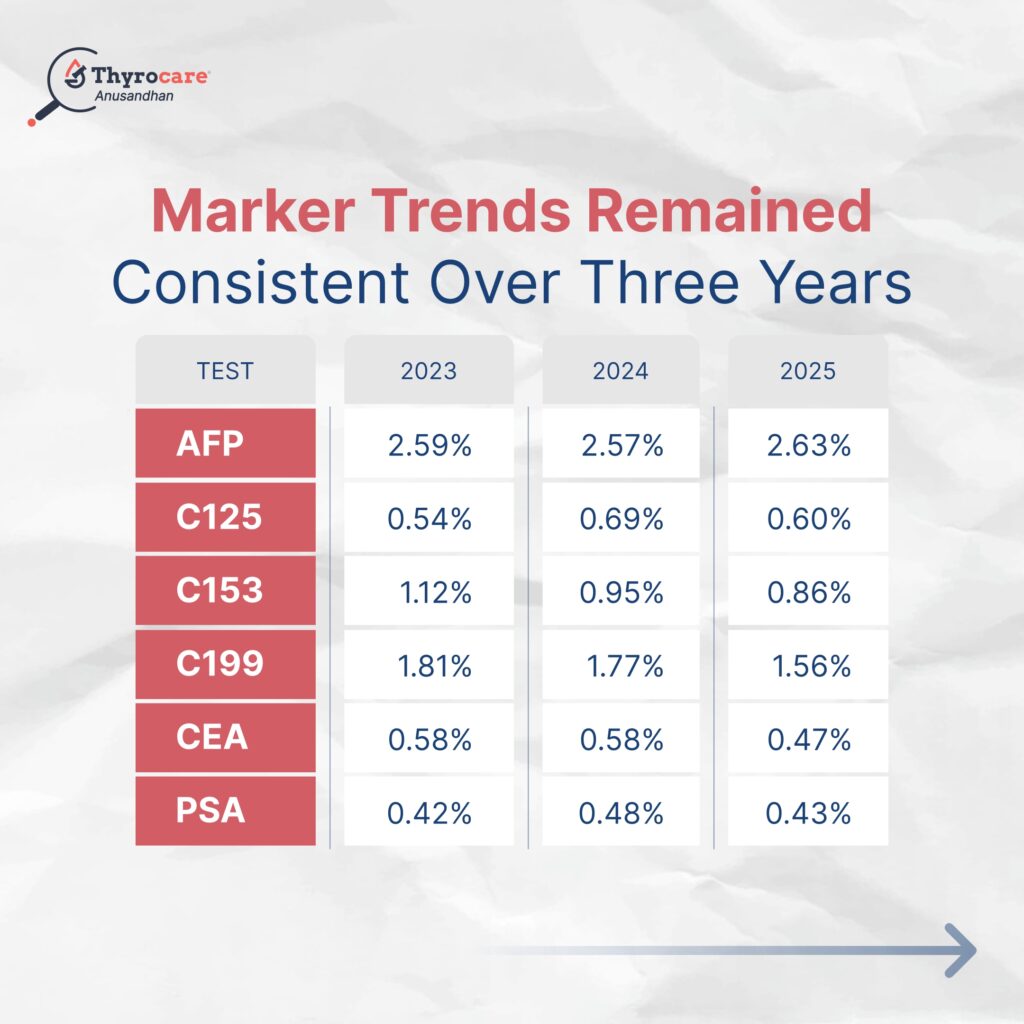
Marker Trends Remained Consistent Over Three Years
Across a three-year period, the overall positivity rates for most tumor markers remained remarkably stable, suggesting that the observed trends are reproducible and not driven by short-term fluctuations.
Dr. Preet Kaur, Chief Scientific Officer, Thyrocare, said, “This analysis demonstrates the value of large-scale laboratory data in understanding tumor marker positivity across a diverse population. When interpreted alongside clinical history, examination, and other diagnostic investigations, tumor markers can provide meaningful insights that support clinical decision-making.”
Adding to this, Dr. Ramesh Kinda, Chief Operating Officer, Thyrocare, said, “As access to health check-ups continues to grow, real-world evidence such as this can deepen our understanding of disease patterns, support earlier detection, and enable timely clinical evaluation, ultimately contributing to improved patient outcomes.”
